
Project Motoko: Are These the Wearables That Will Take Your AI Off the Desktop?
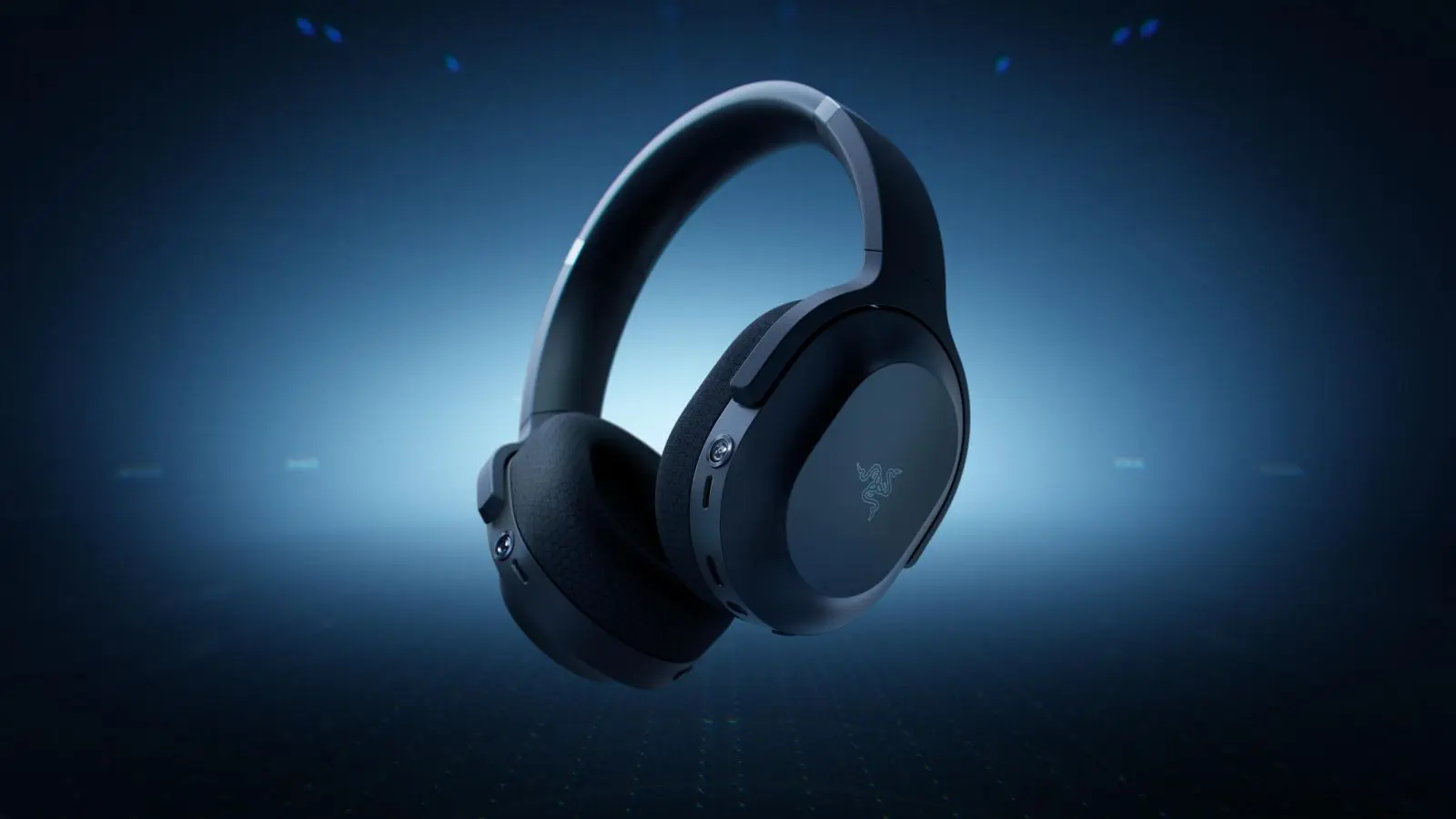
At CES 2026, alongside Project AVA (Razer AVA), Razer unveiled Project Motoko: a wireless headset with cameras and AI. It's a concept with no price or release date, but it shows where Razer wants to take its assistant: off the desk.
Correction — Oct 23, 2026
The first version said Motoko uses Razer AIKit to carry your AVA avatar's personality with you, and described League of Legends and home-repair demos we haven't been able to verify. We've removed them. What follows is based on Razer's press release and Min-Liang Tan's interview with The Verge.
What Exactly Is Project Motoko?
Razer calls it an "AI-native wireless headset concept", built with Qualcomm on Snapdragon platforms. It has two first-person cameras in the ear cups, at eye level, so the AI sees what you see and recognizes objects and text in real time. There's no display: the AI answers you through audio.
How It Relates to Project AVA (Razer AVA)
Razer hasn't announced a specific integration between the two products. What exists is the vision Razer CEO Min-Liang Tan described to The Verge: AVA briefs you at home in the morning and, once you head out, Motoko carries on: "with persistent memory, it will know exactly what has been happening in the home." In his words, "the intelligence is persistent, and it follows you", and the devices are just different form factors.
Sci-Fi Capabilities
- Stereoscopic VisionUnlike the human eye, Motoko maintains a wide field of attention, capturing symbols, text, and details in the periphery that we usually ignore.
- Smart Audio DetectionThanks to its dual near and far-field microphones, the device can process both your voice and the dialogue of people in front of you.
- Universal CompatibilityRazer says it connects with AI platforms such as Grok, OpenAI and Gemini. The prototype The Verge saw at CES ran ChatGPT. Tan said they chose it for its computer vision and quick responses, and that it could also run Grok.
Use Cases: From Gaming to Real Life
These are the examples Razer gives in its press release:
Translating signs
The cameras read the text in front of you, such as a street sign, and the AI translates it.
Counting reps
At the gym, it can keep count of your reps.
Summarizing documents
It can summarize the documents you're looking at on the fly.
Data for robotics
Razer says the first-person vision data it captures, including depth, focus and attention, gives robotics teams datasets to train humanoids.
In The Verge interview, Tan confirmed two more the interviewer suggested: asking for your gate while walking through the airport, or getting help while you play at your desk. When the interviewer doubted it would get the gate right today, Tan replied that it could if it's given snapshots with context, such as location.
Conclusion
Project Motoko asks what happens when your assistant can see what you see. If AVA is the presence on your desk, Motoko would be the eyes and ears outside. For now it's a concept, so there are no battery, weight or camera specs, and no release date.
Our Take
Project Motoko should be taken for what it is: a concept Razer presented, not a product with a confirmed launch date. It is, however, the piece that best reveals the company's long-term vision —an AI that doesn't live on your desk but accompanies you, seeing the world through your eyes—. The link with Project AVA (Razer AVA) is the most interesting part: the same AI you have on your desk would follow you outside with persistent memory, which is what the CEO described on The Verge, although Razer hasn't explained how it would work. If that holds up, Motoko would stop being an isolated gadget and become the continuity layer for the whole Razer AI ecosystem: the same "brain" spread across the desktop, your ears, and now your eyes.
Our big question isn't technical but about privacy: a device with first-person cameras continuously recording your surroundings raises questions Razer hasn't answered yet — where are those frames processed, how long are they retained, and what happens when the camera captures bystanders who never consented? It's the same dilemma the first camera-equipped wearables already faced, and largely lost. Until Razer clarifies that policy, we're treating Motoko as exactly what it is: an intent demo, not a product ready for daily wear. We'll be watching closely once there's a real date, battery specs, and — above all — fine print on privacy.