
Razer AVA: Can you use ChatGPT or Gemini? What the CEO said on The Verge
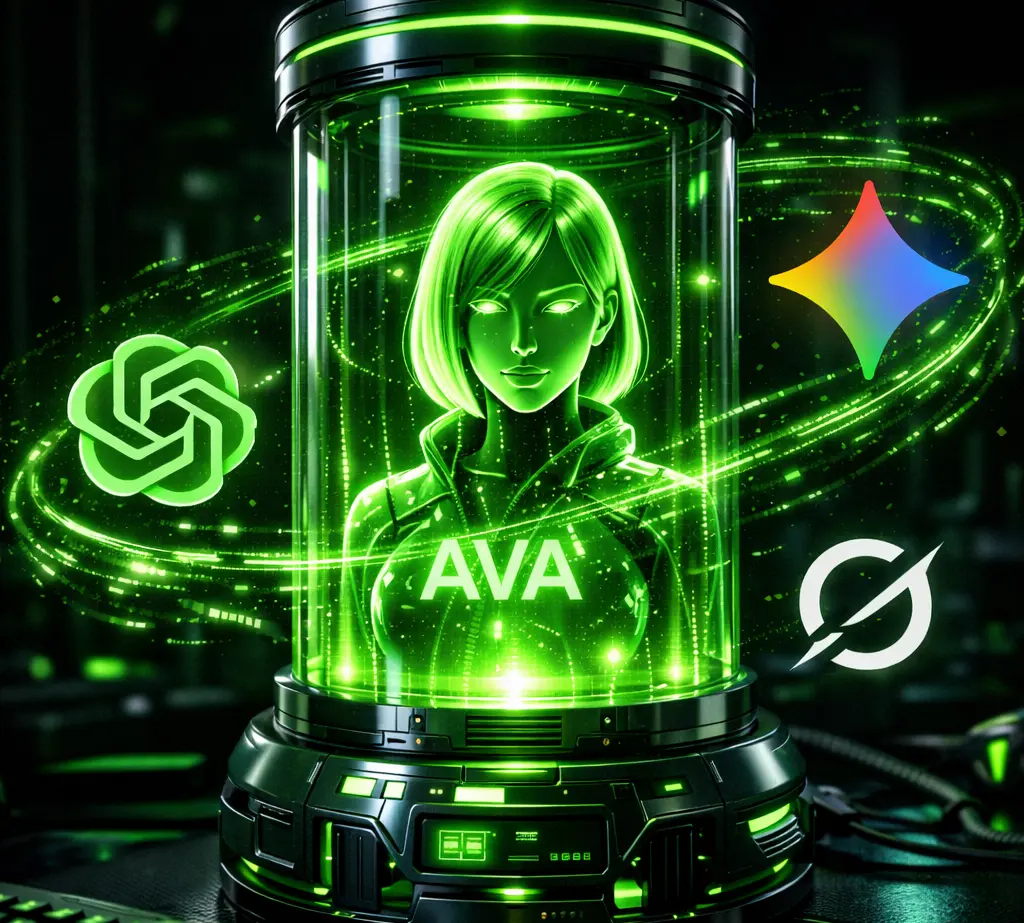
Razer CEO Min-Liang Tan told The Verge that Razer picked Grok for its conversation skills and sees Project AVA (Razer AVA) as an open, "multi-model" platform. He didn't confirm which models you'll be able to choose.
Correction — Oct 23, 2026
We've checked this article against the interview transcript. The first version said Tan "confirmed" you'll be able to choose between Grok, ChatGPT and Gemini, and that the $20 reservation was meant to prepare a rollout in Spain, the US or Latin America. Tan said neither.
The interview
Min-Liang Tan talked about Project AVA (Razer AVA), Project Motoko and AI in games on The Verge's Decoder podcast, recorded during CES 2026. Host Nilay Patel mostly pressed him on the AI model, the reservations and the risks of a character people can get attached to.
Grok, ChatGPT or Gemini? What he actually said
Tan said Razer picked xAI's Grok because, for them, it had the best conversational AI at the time. Then he added: "Ultimately, however, we do see Ava as an open platform, right? If somebody wants to be able to use a different model, it's one of the things that we're taking into consideration. And we are multi-model, right?"
ChatGPT and Gemini came up later, when talking about Project Motoko, the camera headphones, which run ChatGPT. Tan said Motoko could also run Grok, that both AVA and Motoko are "multi-model", and that Gemini, Grok and ChatGPT are all making big advances. He didn't say which models AVA will have. In fact, when discussing reservations he admitted Razer hadn't disclosed "even which model it's gonna be running": "We're leaving that absolutely open."
- Said by Tan: Grok in the CES prototype, an intention to be open and multi-model, and that other models are being considered.
- Repeated by Razer: in February its blog said AVA is being developed as a multi-model platform compatible with various LLMs, without naming them. The official page describes an open architecture "intended to support" other AI platforms.
- Not confirmed: that you'll be able to pick ChatGPT or Gemini, when, or whether you'll need a subscription to each.
Persistent memory: the assistant that follows you
Where Tan was most specific was memory. He described a day with AVA on the desk in the morning and Motoko once you head out, and said that with persistent memory the assistant will know what happened at home: "the intelligence is persistent, and it follows you." The devices, in his words, are just representations of it.
On the $20 deposit, Tan said "these are reservations. They're not pre-orders, per se." He added that the launch "could be a long way out", that Razer hadn't disclosed specs or the model yet, and that if the final product isn't what you expected, you can cancel. He didn't mention countries or dates. For now reservations are only open in the US. See how to reserve Razer AVA.
What About Developers? What Actually Exists Today
Tan didn't announce an SDK for AVA. He did say about 70,000 game developers use "our SDK", but he was talking about Razer in general, not AVA. What does exist is Razer AIKit, its open local AI toolkit, and a sign-up form for studios that want to bring their characters to AVA.
We track this part of the ecosystem on avasdk.com, our independent community resource:
Conclusion: an intention, not a list of models
The key takeaway is that Razer doesn't want to tie AVA to a single model. But Tan gave no names, timelines or conditions, and months later Razer still hasn't. We'll see how it materializes when Early Access arrives.
Our Take
The intention to make AVA an open platform, not tied to Grok, is for us the most relevant part of the interview. If it happens, it changes Razer's business model: it stops selling hardware with a closed AI and starts selling neutral hardware that accepts whatever brain you choose. It's a smart move because it shifts the cost of developing the models to third parties, but it leaves open the question Razer hasn't clearly answered: who pays the cloud AI bill. When Patel asked, Tan said it's something Razer still has to figure out. Persistent memory is the most ambitious piece and the one we're most interested in watching, because an assistant that follows you across devices is also an assistant that accumulates a lot of information about you. We'll keep an eye on how Razer handles that privacy.
There's a risk this strategy doesn't solve: if the "brain" is swappable, Razer's differentiation stops living in the AI and rests almost entirely on the hardware — the hologram itself — and whatever memory and personality layer it builds on top. That's a reasonable bet while Razer remains the only maker with a serious physical hologram on the market, but it turns fragile the day OpenAI, Google, or any other AI lab decides to ship its own device. That's where AIKit and the developer ecosystem start to matter: they're the piece Razer actually controls, and no model provider can replicate that overnight.