
Razer AVA Mini: the April Fools joke that put Razer AIKit to the test
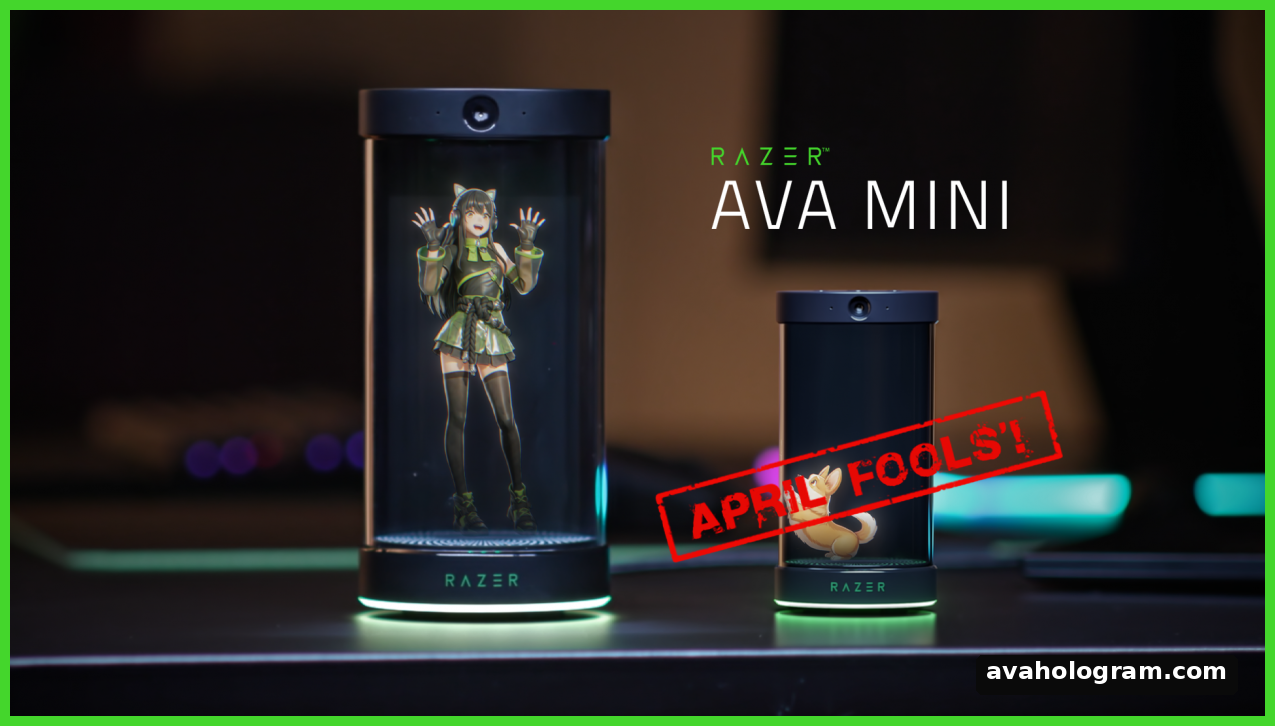
On March 31, 2026 Razer announced AVA Mini, "the first AI companion for an AI companion": a virtual pet to keep Project AVA (Razer AVA) from getting bored. It was Razer's April Fools joke. What was real is the avatar generator built from your pet's photo, powered by Razer AIKit.
Update — Oct 19, 2026
This article was written when Razer was targeting the second half of 2026. Razer has since moved the Razer AVA launch to early 2027, under Early Access. What changed.
Correction — Oct 23, 2026
We've checked this article against Razer's sources. The first version presented the pet's features, which were part of the joke, as real, said the campaign lasted four days (it was five) and attributed statements to Razer that don't appear in its announcements. We now separate the joke from what Razer actually did, with its figures.
The joke: what AVA Mini promised
According to Razer's announcement, AVA Mini was a digital pet that would live alongside AVA to keep it entertained while you work. You'd create it by uploading or scanning a photo of your cat, dog, ferret or other animal, and it would develop its own "pet-sonality" from your habits and what it saw and heard on your desk.
Like any pet, it needed feeding, cleaning and affection. You could switch it off, though AVA might "remember that decision forever". It even promised WhatsApp messages like "AVA Mini has been waiting by your desk for the past 10 minutes."
"Designed to reduce loneliness, increase chaos, and ensure no AI ever has to stare into the void alone again."
— Razer, AVA Mini announcement
None of that is a product. It has no price or date, and Razer later referred to AVA Mini as its April Fools campaign.
What was real: the avatar generator
During the campaign you could upload a photo of your pet and get your AVA Mini character in seconds. A month later, announcing the AIKit update, Razer said that image generation ran end to end on Razer AIKit, deployed on RTX 4090 and RTX 5090 GPUs from the Akash network. In other words, on rented servers, not on each user's computer.
11,000+
images generated over five days, March 31 to April 4, with no manual interventions.
3.24 s
average end-to-end time per image, peaking at 30 images per minute.
$0.01
per image, versus the $0.03–0.15 that cloud image APIs would have cost, according to Razer.
More details in AIKit's omni-modal update.
Will AVA Mini Make It Into the Final Product?
Razer hasn't announced it and nothing suggests the pet is in development. What remains is proof that AIKit can serve thousands of users at low cost, something Razer could reuse in other services.
Our Take
The joke hid a real test. Razer picked the one day of the year nobody takes an announcement seriously to try AIKit with real users: if it failed, it was "just a joke". Because it worked, Razer now has cost and latency figures under real load, and it has used them to pitch AIKit to developers.
It's worth not reading more into the data than it supports. What was tested is image generation on rented servers, not a pet running inside AVA or an animated avatar in the hologram.
If Razer ever wants users to create content for AVA, such as pets, avatars or skins, this campaign is the best hint of how it could do it and at what cost. But that's our hypothesis: Razer hasn't announced anything like it.
Sources
When Does Project AVA (Razer AVA) Launch?
The official Project AVA (Razer AVA) launch is now expected in early 2027. Check dates and available regions.